Search This Blog

Classic Car Gallery
Showing posts with label kawasaki. Show all posts

Monday, December 27, 2010

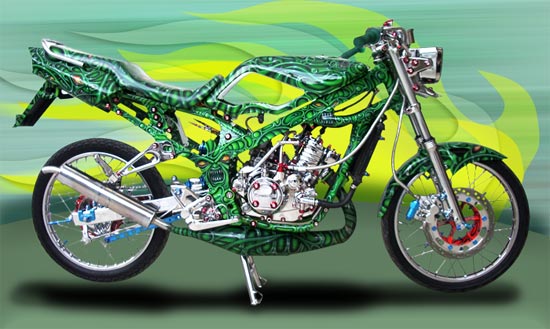
RADICAL MODIFICATION OF KAWASAKI NINJA


modifikasi.jpg

Kawasaki Ninja - a radical modification of the neat and steady for oprasional.

"It looks expensive bgt, whereas if we'd be dibandingin more than Japan should modif motor, lots of crazy modif the price exceeds the price of Aprilia. but cuman doang models which all have the Aprilia Mito.Upside or down, gedhe tires, etc.. "- by Girifumi

Create crazy bro modif Girifumi assumption may be a bit much to make them mengerinyitkan forehead. But for most bikers, especially for bikers who think economically and bikers that prioritizing originality factor may very Girifumi bro assumption is correct.

Cost Factor

An example is the owner of Honda Tiger Revo (nyari safe mode-on), regardless of the cost of the average motorcycle owner modification goal was not far from the model SP NSR, Aprilia or Cagiva Mito. Even beyond the standard may modify them by replacing the light front leg into the foot upside down, the rear suspension to monshock to buy parts like fuel tank parts and the rear panel. Finally, after the modification with the cost of not less be a motor Tiger Revo is a bit like Aprilia, or SP with oddities here and there. The most severe is a radical modification of saving package style, intended to make cost savings, it is the waste and wasting time. Why? Many incidents where the motor modification costs became more expensive than the cost of buying a motor "original" that the goal of modification, is it even a strange hasilnyapun.

Originality factor

This is probably the most controversial paragraphs ever posted in INDOBIKERS. There is a question that is quite intriguing. Does the costume Barcelona numbered 14 you have to be Thierry Henry? Of course not, but certainly you have stated to anyone especially to people who see you that you are a fan or at least sympathizers of the former king of Arsenal. Bahakan if Thierry Henry "original" yes definitely saw you too will smile with you. But by installing fairing Yamaha R1 on the Tiger Revo you, and you happen to run into a real Yamaha R1 would certainly different situations. Maybe nothing happened seemingly anything but actually the driver will only R1 confusion with which you ride motorcycles, often bahakan who scorn it out in the mind of the driver R1 "authentic" is. Besides, whether by using R1 and the fairing you may be necessarily anggot club R1? Unfortunately it's not going to happen but certainly you will lose motor identity.

Creativity without borders

Modifying the motor is the development of creativity without boundaries. But the best pure goal is to modify the original idea, do not imitate or trace moge existing, let alone trace CBU motor sport that costs not much (about the same cost-red) than the price of your own bike. What is clear radical modification of the motor is generally less suitable for daily use. Because like any of the conditions most appropriate motor standarlah used for daily oprasional. If still want to modify the bike but with the condition should be used as a vehicle steadily oprasional daily, the best option is to make minor modifications. Changing tires, veld handlebar and the front or Menganti sockbreaker color and striping pattern into the most appropriate choice. Good luck!

Friday, July 30, 2010

2010 Kawasaki Vulcan 1700 Classic Motorcycle Covers

Elegant Motorcycles Kawasaki Vulcan 1700 Classic 2010

Touring Motorcycles Kawasaki Vulcan 1700 Classic 2010

Vintage Motorcycles Kawasaki Vulcan 1700 Classic 2010

New Motorcycles Kawasaki Vulcan 1700 Classic 2010

2010 Kawasaki Vulcan 1700 Classic

Like the systems in use on the Ninja 650R and Vulcan 900 motorcycles, the 1700 Classic’s fuel injection uses one sensor in The system offers a natural throttle feel, because the APS is activated by a throttle body pulley that’s connected by cables to the throttle grip. Both units feed data to the ECU, which adjusts the throttle plates to tailor intake airflow accordingly. The system utilizes an Accelerator Position Sensor (APS) and a Throttle Position Sensor (TPS).

Working with a powerful ECU and the rest of the fuel injection system, the electronic throttle valve enhances response without detracting from its distinctive V-twin feel--delivering ultra-precise intake flow to the engine under nearly any conditions. Kawasaki’s fully electronic throttle valve system feeds that big V-twin exactly what it needs. The engine’s long-stroke design, high compression and large displacement produce massive amounts of quick-revving torque, all of it delivered with a distinct V-twin character. The Vulcan 1700 Classic V-twin uses a single overhead cam in each cylinder head, rather than a push-rod overhead-valve arrangement, to boost efficiency and provide quick acceleration and superior passing performance.

Witness Exhibit A: The Kawasaki Vulcan 1700 Classic combines things like the latest electronic throttle technology feeding a visceral overhead-cam V-twin, with a dose of old-fashioned cruiser simplicity that lets the rider focus on the experience and not the machine, mile after reliable mile. As a matter of fact, just the opposite. Retro and Techno come together to create one Timeless Cruiser At Kawasaki, we don’t believe classic looks and high technology need to be mutually exclusive.

Cruisers Motorcycles Kawasaki Vulcan 1700 Voyager 2010

2010 Kawasaki Vulcan 1700 Voyager Motorcycle Cover

Luxury Motorcycles Kawasaki Vulcan 1700 Voyager 2010

Elegant Motorcycles Kawasaki Vulcan 1700 Voyager 2010

New Motorcycles Kawasaki Vulcan 1700 Voyager 2010

2010 Kawasaki Vulcan 1700 Voyager
Working with the rest of the fuel injection system, the electronic throttle valve enhances the Yet more unique technology is found in Kawasaki’s fully electronic throttle valve system. (Unlike the Concours 14 ABS, however, only a single K-ACT mode is available.) K-ACT’s coactive function does not engage when braking is initiated at speeds below 12 mph, and the ABS function is automatically disengaged at speeds below four mph. Basically, the front lever also activates the rear brake, and the rear pedal also engages the right front caliper: K-ACT sees to it that that happens seamlessly and efficiently, and the new, second-generation system uses the same smaller, lighter ABS unit and the faster, higher-spec brake ECU found on the Kawasaki Concours 14 ABS motorcycle for even smoother, more precise operation. Available on the ABS-equipped Voyager, K-ACT uses advanced electronics to translate the rider’s braking inputs into both the front lever and rear pedal into smooth, balanced deceleration and maximum stopping performance.

For 2010, the Vulcan Voyager ABS’s complement of cutting-edge electronics is headlined by a new, second-generation version of the Kawasaki Advanced Coactive Braking Technology (K-ACT) system. Built for the touring rider who has to have it all—and look good having it… Flagship of the Vulcan 1700 family, the Kawasaki Vulcan 1700 Voyager and Voyager ABS come equipped with everything the serious touring rider needs to pile on the miles in comfort and style: a large frame-mounted fairing, amazing storage capacity, a sculpted touring seat, electronic cruise control, a premium sound system and a powerful long-stroke 1700cc, liquid-cooled, 52° V-Twin engine.

2010 Kawasaki KLX250SF Motorcycle Covers

New Street Sports Motorcycles Kawasaki KLX250SF 2010

Motorcycle for Sale Kawasaki KLX250SF 2010

Motocross Kawasaki KLX250SF 2010

New Motorcycle Kawasaki KLX250SF 2010

2010 Kawasaki KLX250SF Motorcycle Part

2010 Kawasaki KLX250SF
Wheel The KLX250SF’s fully-adjustable suspension features 16-way adjustable compression and rebound damping on both the 43mm inverted cartridge-style front fork and the UNI-TRAK rear suspension. At the same time, the suspension is still supple enough to soak up most road surface irregularities and offer a smooth ride. These changes provide a reduction in pitching motions during braking and acceleration, and help the rider hold a consistent line during aggressive on-road cornering. The change in setup offers a firmer ride than the 250S, thanks to a change in front fork oil level and revised damping settings for both the fork and shock.

This also results in a more planted feel in corners and a lower seat height. Compared to the KLX250S dual sport, the KLX250SF has reduced wheel travel at both ends, placing the center of gravity lower for improved on-road handling and enhanced straight-line stability. Few motorcycles — of any size or price — are capable of out-cornering it. It’s “just” a 250, but its light weight of just 302 pounds means the KLX250SF packs the sort of performance you’d expect from something bigger and more expensive. Based on Kawasaki’s critically acclaimed KLX250S dual sport on/off-road bike, the SF dials up maximum on-road fun with sticky street radials mounted on 17-inch wheels, a shorter seat height, a bit less suspension travel and a big front brake.

Sticky Street Rubber Meets Lightweight Dual-Sport; Big Fun Can’t Be Far Behind Type “big fun in a small package” into your internet search and it might take you straight to the Kawasaki KLX™250SF supermoto.

New Motorcycles for Sale Kawasaki Versys 2010

Street Sports Motorcycles Kawasaki Versys 2010

2010 Kawasaki Versys Motorcycle Part

2010 Kawasaki Versys Motorcycle Covers

Vintage Motorcycles Kawasaki Versys 2010

2010 Kawasaki Versys Motorcycle Pictures

2010 Kawasaki Versys
The Versys' compact liquid-cooled fuel-injected 649cc parallel-twin engine was the perfect powerplant for this light and nimble do-anything bike right Functionally, the Versys was tough to improve upon, but adding rubber bushings to the rear engine mounts, and topping the footpegs with hollow rubber inserts to better isolate the rider's feet from engine vibration, resulted in a smoother, more relaxed ride. Out back there's a bright new Z1000-type LED tail light, and between the head and tail lights all sorts of pieces have been restyled to reflect the Versys' quality, including the radiator shrouds, mirrors, turn signals, engine covers and rear fender. A new stacked dual-beam headlight leads the way, with a bigger, three-way adjustable windscreen atop it that gives more options to more riders.

Fresh new bodywork showcases the Versys' athletic-looking steel trellis frame, gull-wing swingarm and compact engine, with a newly sculpted shape that shows off the bike's dynamic flexibility and strength. Luckily, the brains at Kawasaki who dreamed up the Versys are not afraid to mess with success, so for 2010, there's even more to love. Motorcyclist magazine named it "Motorcycle of the Year," and the Versys made top 10 lists around the world. Following its debut just a couple of years ago, the world's motorcycle press unanimously embraced the Versys' unique combination of utility, versatility, affordability and just plain fun - and they haven't stopped singing its praises. Now and then, a clean-sheet idea that just plain works appears from out of nowhere, and everybody wonders why nobody thought of it before… That's the Kawasaki Versys®.

2010 Kawasaki Ninja 650R Motorcycle Covers

2010 Kawasaki Ninja 650R Motorcycle Reviews

2010 Kawasaki Ninja 650R Motorcycle Parts

2010 New Motorcycles Kawasaki Ninja 650R

Sports Motorcycles Kawasaki Ninja 650R 2010

2010 Kawasaki Ninja 650R
This spunky sportbike's frame, swingarm and suspension The manageable power delivery and superb roll-on response enable the new Ninja 650R to make short work of the morning commute or perform as an entertaining track day companion - all while delivering good fuel economy. The shift lever position permits easy application of the Ninja 650R's linear power delivery. The non-intimidating twin-cylinder appeals to new riders, and has an excellent mid-range that offers enough pizzazz to thrill more advanced riders.

The engine also meets stringent emission regulations thanks to its precise fuel-injection and a three-way catalyst system with a 300-cell catalyzer. Routing the coolant to the cylinder and head through the engine cases reduces the number of external hoses. Fuel injection and ignition settings on this torquey engine are carefully chosen to boost bottom-end torque, smooth low-mid rpm response and allow it to rev more quickly. The key to the Ninja 650R's slender size is its compact liquid-cooled, fuel-injected, DOHC, 8-valve 649cc parallel twin engine, which permits the use of a narrow, lightweight frame. Carefully tuned suspension , triple disc brakes and a curb weight of just 450 pounds give this special motorcycle the sort of performance you expect from a Ninja sportbike.

Sleek form meets superior function in the bike's full fairing, and in the way its steel trellis frame integrates into its stylish swingarm via an innovative side-mounted shock. Kawasaki Engineering and Exotic Flair Make This One Spicy Ninja Streetbike Fuel-injected Ninja twin-cylinder performance, a beautiful Euro-inspired chassis, and relaxed all-day comfort combine to form the sweet, do-it-all Ninja 650R.

Tuesday, July 20, 2010

2010 Kawasaki ER-6n Motorcycle Covers

2010 Kawasaki ER-6n Motorcycle Pictures

2010 New Motorcycles Kawasaki ER-6n

2010 Sports Motorcycles Kawasaki ER-6n

2010 Touring Motorcycles Kawasaki ER-6n

2010 Vintage Motorcycles Kawasaki ER-6n

2010 Kawasaki ER-6n
This manageable powerplant offers superb roll-on response and enables the ER-6n to fluently The non-intimidating twin-cylinder appeals to riders with its excellent mid-range and plenty of character to thrill more advanced riders. The clean, size-efficient engine delivers good fuel economy and also meets stringent emission regulations, thanks to its precise fuel-injection and a three-way catalyzer system. Its coolant is routed to the cylinder and head through the engine cases, reducing the number of hoses and simplifying the cooling system.

Its fuel injection settings grant the engine plenty of bottom-end torque and smooth low-mid rpm response. The key to the ER-6n’s slender size is its compact liquid-cooled, fuel-injected, DOHC 8-valve 649cc parallel-twin engine, which permits the use of a narrow, lightweight frame. And did we mention deleting the fairing also brings the price down substantially? Otherwise, the ER-6n packs all the hardware and handling that’s made it and its Ninja 650R brother such media darlings. This one’s for riders who love the feel of being in the wind — a particularly good thing if you mostly ride where the weather’s hot.

The ER-6n gets a vestigial flyscreen around its headlight / instrument pod, but for the most part the fairing of this “naked” style bike has gone bye-bye. The ER-6n simply leaves a little more of that torquey, rev-happy 650 twin’s innovative inner beauty out where you can see it, revealing this soulful machine’s mechanical purity of purpose. But nearly all riders agree Kawasaki’s Ninja 650R is a great, fun-to-ride middleweight motorcycle. Some riders like a fully faired sportbike, some don’t.

2010 New Sports Motorcycles Kawasaki Z1000

2010 Kawasaki Z1000 Motorcycle Covers


2010 Kawasaki Z1000 Motorcycle Pictures

2010 New Street Sport Motorcycle Kawasaki Z1000

2010 New Motorcycles Kawasaki Z1000

2010 Elegant Motorcycles Kawasaki Z1000

2010 Kawasaki Z1000
Wherever The engine bolts in solidly, stressed-member style, at three places, and in a rubber mount at the upper rear of the crankcase for great torsional rigidity and solid handling. Similar in concept to the frame of the Ninja ZX-10R sportbike, the frame beams curve over the engine, resulting in a narrow bike that’s easy to grip with the knees. Previous Z1000s used a steel frame, but this one gets its own all-new aluminum one. The seat’s low and narrow at the front to make ground contact easy, and it flows beautifully rearward to end in a futuristically retro LED taillight behind a red lens.

Following the lines rearward, the eyes will next encounter a dynamically designed steel gas tank, flared on the sides to let you grab it with your knees, and trim at the rear for a snug fit. Just below that a long, narrow headlight represents Kawasaki’s first use of a line-beam unit. A sharp new front cowl sloped back at an acute angle highlights the Z1000’s new nose, followed by a tilting instrument panel, visible through an orange lens, that can be angled to suit rider preference. Even more important, though, is the feeling this one provides every time you twist the throttle. If the new Z1000 knocks your eyeballs out, that’s exactly what we had in mind.

With this latest in a long line of naked Kawasaki streetbikes, we threw out the old rules and started with a clean sheet, drawing upon more than 35 years of experience in giving the people what they want.

2010 Street Sports Motorcycles Kawasaki Concours 14

2010 Kawasaki Concours 14 Motorcycle Covers

2010 Touring Motorcycles Kawasaki Concours 14

2010 New Adventure Motorcycles Kawasaki Concours 14

2010 Kawasaki Concours 14
When the weather turns cooler, the new bike’s got your hands covered, with standard grip heaters that are easily adjustable via a control Meanwhile, a 2.75-inch taller, electric-adjustable windscreen creates a bigger still-air pocket for the rider and passenger, and new ducts above the instrument panel relieve the low pressure area behind the windscreen for an even smoother, quieter cruise. The biggest change is immediately apparent: All-new bodywork not only gives the new Concours 14 an even more aggressive demeanor, it’s also designed to channel more heat away from the rider for increased comfort. Two years on, the next-generation Concours 14 benefits from an entire laundry list of comfort, convenience and safety items carefully engineered to surpass all expectations of what a perfect sport tourer should be. But the people who ride these motorcycles are not known for their patience.

That bike’s amazing 1,352cc engine and unique monocoque frame lent themselves perfectly to this exciting new class of transcontinental sport touring motorcycles, and the original Kawasaki Concours 14 and Concours 14 ABS rose immediately to the top of the critics’ lists just two short years ago. More Technology and Refinement for This Multiple Award Winner Performance touring comes naturally to Kawasaki, seeing as how we already had the performance part of the equation nailed with the incredible Ninja ZX-14 sportbike. Delivering both awesome supersport performance and comfortable long-distance touring potential, the Concours 14 stands apart from its rivals. Building on the continent-crossing performance of its predecessor, the 2010 Concours 14 incorporates new touring features and the latest rider support technology.