Search This Blog

Classic Car Gallery

Saturday, November 27, 2010

new motorsport modification

new motorsport modification

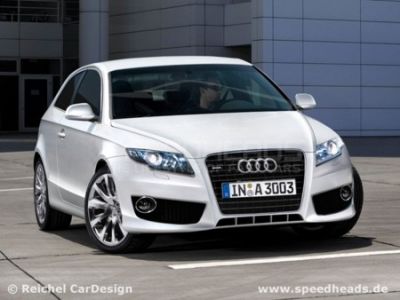
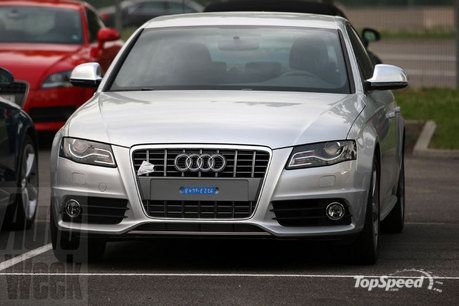
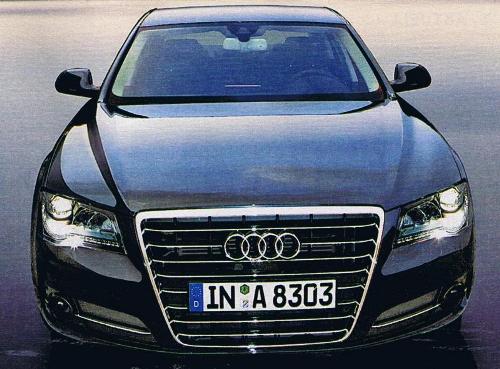
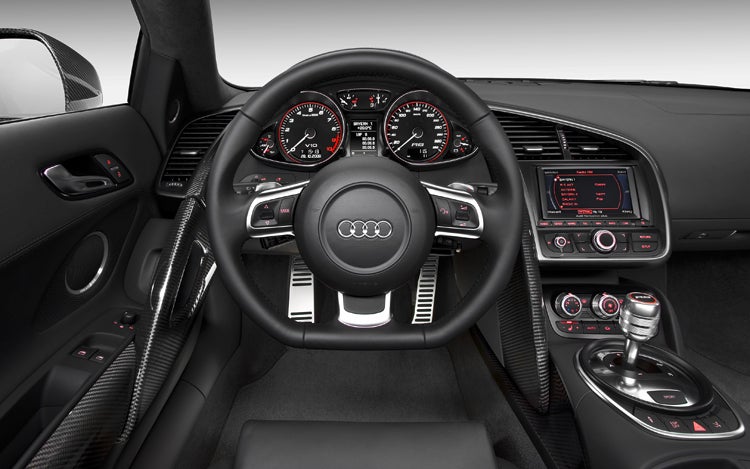
audi 2010 pics

Audi AG (Xetra: NSU) is a German manufacturer of a range of automobiles, from supermini to crossover SUVs in various body styles and price ranges that are marketed under the Audi brand, German pronunciation:
The company is headquartered in Ingolstadt, Germany, and has been a wholly owned subsidiary of Volkswagen AG since 1966, following a phased purchase of its predecessor, Auto Union, from its former owner, Daimler-Benz. Volkswagen relaunched the Audi brand with the 1965 introduction of the Audi F103 series.
The company name is based on the surname of the founder August Horch, meaning listen — which, when translated into Latin, becomes Audi.
Contents
* 1 History
o 1.1 Birth of the company and its name
o 1.2 Auto Union era
o 1.3 Post-World War II
o 1.4 New Auto Union
o 1.5 Modern era
o 1.6 Audi AG today
* 2 Technology
o 2.1 Bodyshells
o 2.2 Drive layout
o 2.3 Engines
o 2.4 Competitors
o 2.5 Space frame
o 2.6 Audi A2
o 2.7 Audi A4
o 2.8 Direct-Shift Gearbox
o 2.9 Fuel Stratified Injection
o 2.10 Electric technology
o 2.11 LED daytime running lights
o 2.12 Multi Media Interface
* 3 Model lineup
o 3.1 S Models
o 3.2 RS Models
o 3.3 Past models
* 4 Motorsports
o 4.1 Rallying
o 4.2 In the USA
o 4.3 Touring cars
o 4.4 Sports car racing
* 5 Marketing
o 5.1 Logos
o 5.2 Slogans
o 5.3 Sponsorships
o 5.4 Multitronic campaign
o 5.5 Typography
o 5.6 In video games
o 5.7 Audi TDI
o 5.8 Audi e-tron
* 6 References
* 7 External links
History
Birth of the company and its name
Audi Type E
On November 14, 1899, August Horch (1868–1951) established the company A. Horch & Cie. in the Ehrenfeld district of Cologne, but because of dispute between him and the supervisory board, he had to leave the company. A few years later, he established a second company, Horch Automobil-Werke GmbH. The company traces its origins back to 1909 and August Horch. The first Audi automobile, the Audi Type A 10/22 hp (16 kW) Sport-Phaeton, was produced in 1910 in Zwickau.
In 1909, Horch was forced out of the company he had founded. He then started a new company in Zwickau and continued using the Horch brand. His former partners sued him for trademark infringement, and the German Supreme Court (Reichsgericht in Berlin) finally determined that the Horch brand belonged to his former company
August Horch was barred from using his own family name in his new car business, so he called a meeting with his best business friends, Paul and Franz Fikentscher from Zwickau. At the apartment of Franz Fikentscher, they discussed how to come up with a new name for the company. During this meeting, Franz's son was quietly studying Latin in a corner of the room. Several times he looked like he was on the verge of saying something but would just swallow his words and continue working, until he finally blurted out, "Father – audiatur et altera pars... wouldn't it be a good idea to call it audi instead of horch?Horch!" in German means "Hark!" or "hear", which is "Audi" in Latin. The idea was enthusiastically accepted by everyone attending the meeting. The first Audi car, the Type B, 10/28PS was delivered early in 1910.
Audi started with a 2612 cc inline-four engine model[clarification needed] followed by a 3564 cc model, as well as 4680 cc and 5720 cc models. These cars were successful even in sporting events. The first six cylinder model,[clarification needed] 4655 cc appeared in 1924.
August Horch left the Audi company in 1920 for a high position at the ministry of transport, but he was still involved with Audi as a member of the board of trustees. In September 1921, Audi became the first German car manufacturer to present a production car, the Audi Type K, with left-handed drive. Left-hand drive spread and established dominance during the 1920s because it provided a better view of oncoming traffic, making overtaking safer.
audi 2010
audi 2010
audi 2010
audi 2010
audi 2010
audi 2010
audi 2010
audi 2010
audi 2010
audi 2010
audi 2010

audi 2010

Friday, November 26, 2010

honda car 2010

Honda Motor Company, Ltd. (Japanese: Honda Giken Kōgyō Kabushiki-gaisha?, Honda Technology Research Institute Company, Limited) About this sound listen (help·info) (TYO: 7267) is a Japanese multinational corporation primarily known as a manufacturer of automobiles and motorcycles.
Honda has been the world's largest motorcycle manufacturer since 1959, as well as the world's largest manufacturer of internal combustion engines measured by volume, producing more than 14 million internal combustion engines each year. Honda surpassed Nissan in 2001 to become the second-largest Japanese automobile manufacturer. As of August 2008[update], Honda surpassed Chrysler as the fourth largest automobile manufacturer in the United States. Honda is the sixth largest automobile manufacturer in the world.
Honda was the first Japanese automobile manufacturer to release a dedicated luxury brand, Acura, in 1986. Aside from their core automobile and motorcycle businesses, Honda also manufactures garden equipment, marine engines, personal watercraft and power generators, amongst others. Since 1986, Honda has been involved with artificial intelligence/robotics research and released their ASIMO robot in 2000. They have also ventured into aerospace with the establishment of GE Honda Aero Engines in 2004 and the Honda HA-420 HondaJet, scheduled to be released in 2011. Honda spends about 5% of its revenues into R&D.
Contents
* 1 History
* 2 Corporate profile and divisions
* 3 Current market position
* 4 Leadership
* 5 Products
o 5.1 Automobiles
o 5.2 Motorcycles
o 5.3 Power Equipment
o 5.4 Engines
o 5.5 Robots
o 5.6 Aircraft
o 5.7 Mountain bikes
* 6 Motorsports
o 6.1 Automobile
o 6.2 Motorcycles
* 7 Electric and alternative fuel vehicles
o 7.1 Compressed natural gas
o 7.2 Flexible-fuel
o 7.3 Hybrid electric
o 7.4 Hydrogen fuel cell
* 8 Marketing
o 8.1 Sports
* 9 Facilities (partial list)
* 10 U.S. Honda models
* 11 Sales
* 12 See also
* 13 Notes
* 14 References
* 15 External links
History
Wiki letter w cropped.svg This section requires expansion.
From a young age, Honda's founder, Soichiro Honda (, Honda Sōichirō) had a great interest in automobiles. He worked as a mechanic at a Japanese tuning shop, Art Shokai, where he tuned cars and entered them in races. A self-taught engineer, he later worked on a piston design which he hoped to sell to Toyota. The first drafts of his design were rejected, and Soichiro worked painstakingly to perfect the design, even going back to school and pawning his wife's jewelry for collateral. Eventually, he won a contract with Toyota and built a factory to construct pistons for them, which was destroyed in an earthquake. Due to a gasoline shortage during World War II, Honda was unable to use his car, and his novel idea of attaching a small engine to his bicycle attracted much curiosity. He then established the Honda Technical Research Institute in Hamamatsu, Japan, to develop and produce small 2-cycle motorbike engines. Calling upon 18,000 bicycle shop owners across Japan to take part in revitalizing a nation torn apart by war, Soichiro received enough capital to engineer his first motorcycle, the Honda Cub. This marked the beginning of Honda Motor Company, which would grow a short time later to be the world's largest manufacturer of motorcycles by 1964.
The first production automobile from Honda was the T360 mini pick-up truck, which went on sale in August 1963. Powered by a small 356 cc straight-4 gasoline engine, it was classified under the cheaper Kei car tax bracket.[citation needed] The first production car from Honda was the S500 sports car, which followed the T360 into production in October 1963. Its chain driven rear wheels point to Honda's motorcycle origins.[citation needed]

"Honda" in Japanese is, which literally means "root field" or "original field".
honda car
honda car
honda car
honda car
honda car
honda car
honda car
honda car
honda car
honda car
honda car
honda car
honda car
honda car

New Honda VT750S Priview <!--d123f5c393494d71a415dacafaf8eec3-->

The British analysis of Honda appear today that the New Honda VT750S naked bike is now accessible for purchasing at the company’s motorcycle dealerships beyond the country. Sporting a brownish blah finish,the VT750S is advised to be a acceptable best for riders attractive for added abundance and easier handling. Suitable for motorcyclists of all levels of experience, the VT750S is powered by a liquid-cooled, V-twin of 745cc boasting a PGM-FI fuel-injection system.

( 2010 ) NEW HONDA VT750S PICTURE
In Honda’s opinion, “performance is impressive, with the motor advised to accord optimum achievement in the low to mid-section of the rev-range – aloof area you charge it out on the road.”

The anatomy uses a strong, animate bifold cradle design, while the all-embracing anatomy is ablaze and compact. Rounding off the attending are the 19-inch avant-garde and 16-inch/150mm rear wheels. The appearance is aggressive by the Sportster band of American and the apparatus is ultra reliable and tested, based on 52 ° V-twin with a 3-valve SOHC active and 745 cc displacement, the aforementioned as added Honda 750 custom from which it differs mainly for the final drive, alternation instead of drive shaft.

( 2010 ) NEW HONDA VT750S PICTURE( 2010 ) NEW HONDA VT750S WALLPAPERS

The bench is placed at 737 mm from the arena and active aspect is added “active” than that ultra adequate models Shadow and Black Spirit , this is not too avant-garde through the pegs and handlebars at the about-face comfortably. The spoked auto are 19 inch avant-garde and 16 inch rear tires 100/90-19 and 150/80-16. The brakes accommodate a avant-garde disc 296 mm dual-piston caliper and rear boom of 180 mm. The blush accessible is alone one: ‘Heavy Gray Metallic’.

Thursday, November 25, 2010

saab 2010 pic..

saab 2010
saab 2010
saab 2010
saab 2010
saab 2010
saab 2010
saab 2010
saab 2010
saab 2010
saab 2010
saab 2010saab 2010

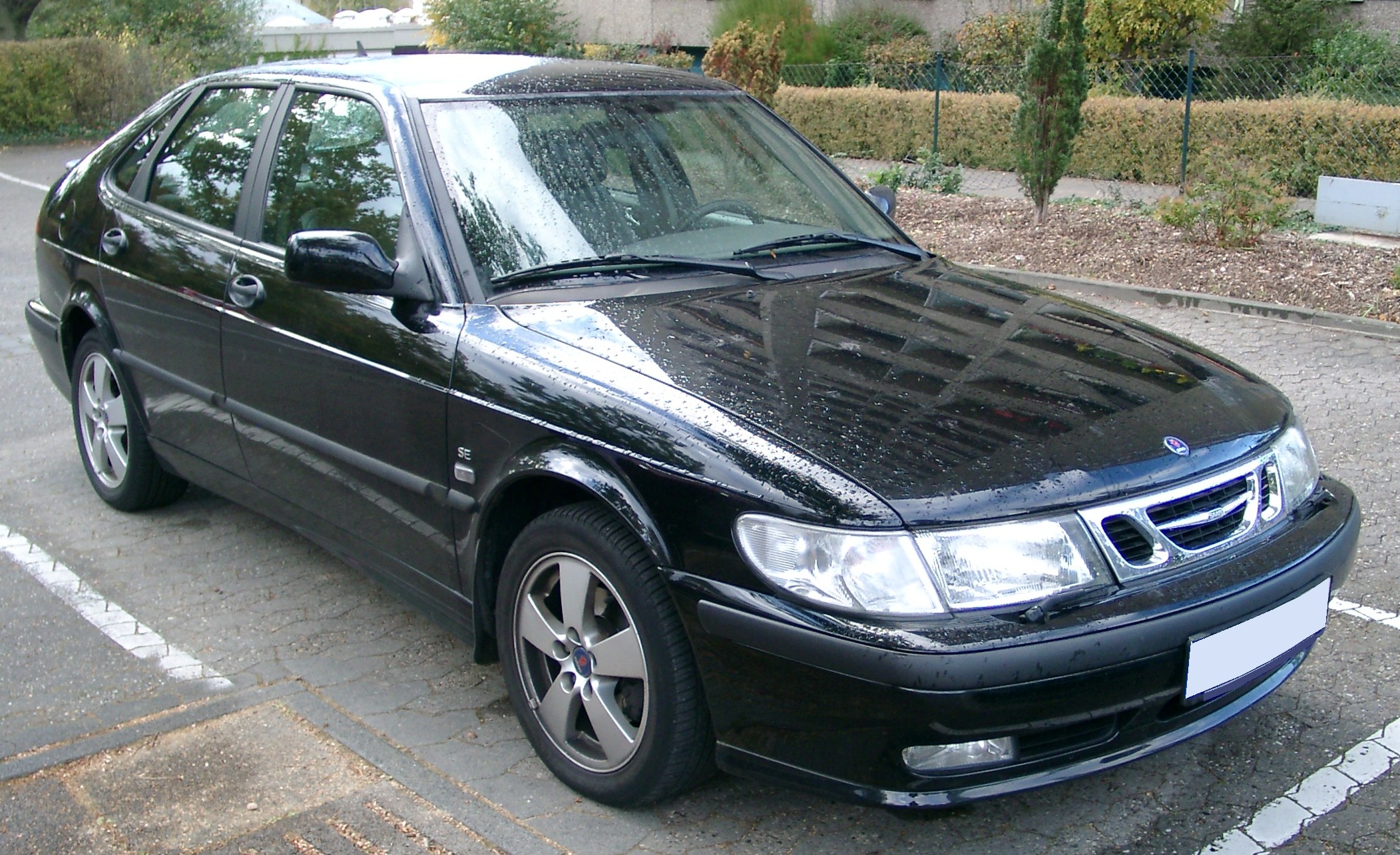
saab cars pics

Saab Automobile AB, better known as Saab (English pronunciation: , or SAAB, an acronym for Svenska Aeroplan Aktiebolaget), is a Swedish car manufacturer owned by Dutch automobile manufacturer Spyker Cars NV. It is the exclusive automobile Royal Warrant holder as appointed by the King of Sweden. Since its inception, Saab has been known for innovation, pioneering significant advancements in ergonomics, green technology, safety and turbocharging. Originally the automobile manufacturing division of Svenska Aeroplan Aktiebolaget (English: Swedish Airplane Limited), later known as Saab AB, Saab Automobile was acquired by General Motors in 1990 who sold it to Spyker Cars in 2010.
Contents
* 1 Company history
o 1.1 Svenska Aeroplan AB (1948–1969)
o 1.2 Saab-Scania (1969–1989)
o 1.3 General Motors ownership (1989–2010)
o 1.4 Sale to Spyker (2010)
* 2 Production
* 3 Models
o 3.1 Current models
o 3.2 Future models
o 3.3 Historical models
o 3.4 Concepts and prototypes
* 4 Innovations
* 5 Safety
* 6 Endurance records
* 7 Marketing and ownership
o 7.1 Ownership and brand loyalty
o 7.2 Slogans
* 8 Literature and the arts
* 9 See also
* 10 References
* 11 External links
Company history
92001
Saab was originally a division of Svenska Aeroplan Aktiebolaget (English: Swedish Airplane Limited), which had been created in 1937 in Linköping. The company had been established in 1937 for the express purpose of building aircraft for the Swedish Air Force to protect the country’s neutrality as Europe moved closer to war. As the war drew towards a close and the market for fighter planes evaporated, the company began looking for new markets in which to diversify.
Svenska Aeroplan AB (1948–1969)
Saab 92
Saab 93B
Saab 96
Saab 99
In 1944, Project 92 began, with the goal of creating the first Saab passenger car. The result, the Saab 92001 (or Ursaab), was unveiled three years later, with a design that highlighted the company’s roots in aviation. Notably, the car’s drag coefficient of 0.30 was the lowest of any production car of the time.
Three years into Project 92, a company site in Trollhättan was converted to allow automobile assembly and the project moved there. The company has remained headquartered there since.
In 1949, Saab was ready to bring the car to market, and the Saab 92 went into production, selling 20,000 examples through the mid-1950s.
The 92 was thoroughly redesigned and reengineered in 1955, and accordingly was renamed the Saab 93. The car’s engine gained a cylinder, going from two to three and its front fascia became the first to sport the first incarnation of Saab’s trademark trapezoidal radiator grill. A wagon variant, the Saab 95, was added in 1959.
The decade also saw Saab’s first foray into performance motoring with the Saab 94, the first of the four Saab Sonetts.
1960 saw the third major revision to the 92’s platform in the Saab 96. The 96 was an important model for Saab: it was the first Saab to be widely exported out of Sweden. It proved very popular, selling nearly 550,000 examples.
Even more important to the company’s fortunes was 1968’s Saab 99. The 99 was the first all-new Saab in 19 years, and unlike its predecessors, severed all ties with the 92. The 99 had many innovations and features that would come to define Saabs for decades: wraparound windscreen, self-repairing bumpers, headlamp washers and side-impact door beams.
The design by Sixten Sason was no less revolutionary than the underlying technology, and elements like the Saab “hockey stick” profile graphic continue to influence Saab design.
saab cars
saab cars
saab cars
saab cars
saab cars
saab cars
saab cars
saab cars
saab cars
saab cars
saab cars
saab cars
saab cars
saab cars
saab cars