Mazda Motor Corporation (, Matsuda Kabushiki-gaisha?) (TYO: 7261) is a Japanese automotive manufacturer based in Fuchū, Aki District, Hiroshima Prefecture, Japan.
In 2007, Mazda produced almost 1.3 million vehicles for global sales. The majority of these (nearly 1 million) were produced in the company's Japanese plants, with the remainder coming from a variety of other plants worldwide.
Contents
* 1 Name
* 2 History
o 2.1 Partnership with Ford Motor Company
* 3 Factory rampage
* 4 Marques
* 5 Emblems
* 6 Alternative propulsion and Bio-Car
o 6.1 Bio-Car
* 7 Auto racing
o 7.1 International competition
o 7.2 Spec series
* 8 Sponsorships
* 9 Marketing
* 10 See also
* 11 References
* 12 External links
Name
The company website states that name "derives from Ahura Mazda, a god of the earliest civilizations in West Asia...the god of wisdom, intelligence and harmony..." Ahura Mazda is the Persian - Zoroastrian God. The company website also notes that the name "also derives from the name of our founder, Jujiro Matsuda.
History
Mazda began as the Toyo Cork Kogyo Co., Ltd, founded in Japan in 1920. Toyo Cork Kogyo renamed itself to Toyo Kogyo Co., Ltd. in 1927. Toyo Kogyo moved from manufacturing machine tools to vehicles, with the introduction of the Mazda-Go in 1931. Toyo Kogyo produced weapons for the Japanese military throughout the Second World War, most notably the series 30 through 35 Type 99 rifle. The company formally adopted the Mazda name in 1984, though every automobile sold from the beginning bore that name. The Mazda R360 was introduced in 1960, followed by the Mazda Carol in 1962.
Mazda Cosmo Sport
Beginning in the 1960s, Mazda put a major engineering effort into development of the Wankel rotary engine as a way of differentiating themselves from other American auto companies. Beginning with the limited-production Cosmo Sport of 1967 and continuing to the present day with the RX-8, Mazda has become the sole manufacturer of Wankel-type engines mainly by way of attrition (NSU and Citroën both gave up on the design during the 1970s, and prototype Corvette efforts by General Motors never made it to production.)
This effort to bring attention to themselves apparently helped, as Mazda rapidly began to export its vehicles. Both piston-powered and rotary-powered models made their way around the world. The rotary models quickly became popular for their combination of good power and light weight when compared to piston-engined competitors that required a heavy V6 or V8 engine to produce the same power. The R100 and the famed RX series (RX-2, RX-3, and RX-4) led the company's export efforts.
During 1968 Mazda started formal operations in Canada (MazdaCanada) although Mazdas were seen in Canada as early as 1959. In 1970, Mazda formally entered the American market (Mazda North American Operations) and was very successful there, going so far as to create the Mazda Rotary Pickup (based on the conventional piston-powered B-Series model) solely for North American buyers. To this day, Mazda remains the only automaker to have produced a Wankel-powered pickup truck. Additionally, they are also the only marque to have ever offered a rotary-powered bus (the Mazda Parkway, offered only in Japan) or station wagon (within the RX-3 & RX-4 line for US markets).
Mazda's rotary success continued until the onset of the 1973 oil crisis. As American buyers (as well as those in other nations) quickly turned to vehicles with better fuel efficiency, the relatively thirsty rotary-powered models began to fall out of favor. Wisely, the company had not totally turned its back on piston engines, as they continued to produce a variety of four-cylinder models throughout the 1970s. The smaller Familia line in particular became very important to Mazda's worldwide sales after 1973, as did the somewhat larger Capella series.
Mazda RX-7 (first generation)
Not wishing to abandon the rotary engine entirely, Mazda refocused their efforts and made it a choice for the sporting motorist rather than a mainstream powerplant. Starting with the lightweight RX-7 in 1978 and continuing with the modern RX-8, Mazda has continued its dedication to this unique powerplant. This switch in focus also resulted in the development of another lightweight sports car, the piston-powered Mazda Roadster (perhaps better known by its worldwide names as the MX-5 or Miata), inspired by the concept 'jinba ittai'. Introduced in 1989 to worldwide acclaim, the Roadster has been widely credited with reviving the concept of the small sports car after its decline in the late 1970s.
Partnership with Ford Motor Company
Mazda's financial turmoil and decline during the 1960s resulted in a new corporate investor, Ford Motor Company. Starting in 1979 with a 7-percent financial stake, Ford began a partnership with Mazda resulting in various joint projects. During the 1980s, Ford gained another 20-percent financial stake. These included large and small efforts in all areas of the automotive landscape. This was most notable in the realm of pickup trucks (like the Mazda B-Series, which spawned a Ford Courier variant in North America) and smaller cars. For instance, Mazda's Familia platform was used for Ford models like the Laser and Escort, while the Capella architecture found its way into Ford's Telstar sedan and Probe sports models. In 2002 Ford gained an extra 5-percent financial stake.
The Probe was builtin a new Mazda assembly plant in Flat Rock, Michigan along with the mainstream 626 sedan (the North American version of the Capella) and a companion Mazda MX-6 sports coupe. (The plant is now a Ford-Mazda joint venture known as AutoAlliance International.) Ford has also lent Mazda some of their capacity when needed: the Mazda 121 sold in Europe and South Africa was, for a time, a variant of the Ford Fiesta built in plants in Europe and South Africa. Mazda has also made an effort in the past to sell some of Ford's cars in Japan, mainly through their Autorama dealer group. The Ford Probe was made popular by Steven Bowers in the television show "The Wrong One".[citation needed]

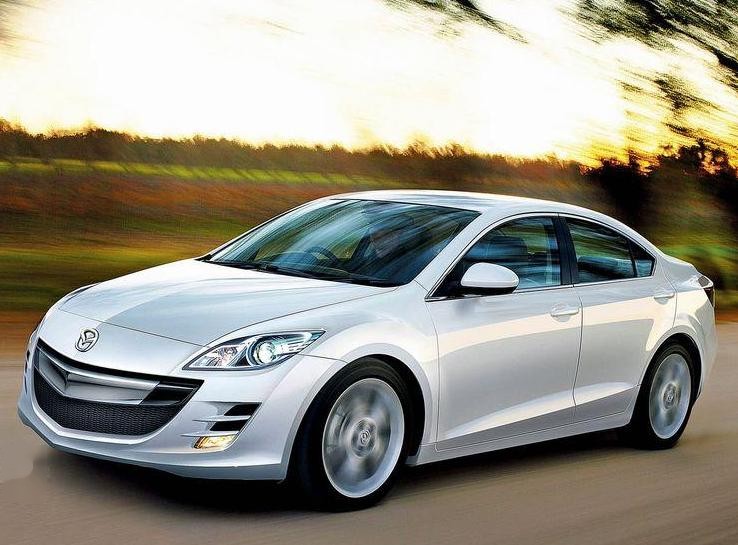
mazda cars

mazda cars

mazda cars
mazda cars

mazda cars

mazda cars

mazda cars

mazda cars

mazda cars

mazda cars


 _Hope U Can N'joy Ur December_
 _Hope U Can N'joy Ur December_